
Suffolk County Arrest Warrants Explained
A Suffolk County arrest warrant is a court's arrest order. It names a person and directs an authorized officer to bring that person before the court. A judge issues one after a complaint or an indictment. The document states the charge, the case, and the officer's instructions. Rule 6 of the Massachusetts Rules of Criminal Procedure controls. A District or Municipal Court can authorize a warrant in its own case. A juvenile under 12 is the exception. Superior Court issues one after indictment. A prosecutor may also request a warrant when a person does not respond to a summons.
Suffolk County Arrest Warrants From Complaint
A Suffolk County warrant has a clear life. A complaint or indictment starts the case. The court then picks a summons or a warrant. If a warrant goes out, an officer serves it and files the return with the issuing court. Chapter 276, section 21 supplies the judicial authority to issue process, while section 23 covers service anywhere in the state. An unexecuted warrant can be returned or cancelled, and delay cannot be unreasonable. If the case resolved without service, the return paperwork shows that.
Inside a Suffolk County Arrest Warrant
A Suffolk County warrant follows a short, standard form. The public docket shows only part of it. The internal warrant system carries far more identifying detail than any public page displays.
| Issuing Court | The department, division, and location that authorized the warrant. |
|---|---|
| Person Named or Described | The subject, as the court record states it. |
| Substance of the Offense | The charge and its classification. |
| Judicial Authorization | The judge's authorization and the issue date. |
| Command | A direction to arrest and bring the person to court. |
| Return | The serving officer's report back, including execution or cancellation. |
Note: The internal system holds descriptors such as date of birth and physical detail, but those fields are not public page content.
Suffolk County Warrant Courts Compared
Where the warrant came from decides who to call. A Boston Municipal Court warrant sits with that division clerk. A Chelsea or Revere lower-court warrant sits with Chelsea District Court. A felony indictment warrant goes to the Suffolk Superior criminal clerk on the 14th floor at 3 Pemberton Square, (617) 788-8160. That floor split matters. Criminal business sits on the 14th floor, probation on the 7th, and the civil clerk on the 12th. Routing a warrant question to the wrong floor wastes an afternoon.
Serving Arrest Warrants in Suffolk County
Service belongs to the agency named in the warrant system. Any officer authorized to serve criminal process can execute it, and Rule 6 requires the officer to show the warrant on request as soon as possible. Chapter 276, section 23 lets certain Massachusetts warrants be served anywhere in the Commonwealth. The Suffolk County Sheriff's Department plays a different role. It runs the jail at 200 Nashua Street and the House of Correction at 20 Bradston Street. Its pages cover facilities, custody, and civil process rather than a warrant list. Suffolk County custody questions go to its records lines. The jail line is (617) 635-1100. The House of Correction line is (617) 635-1000.

Those facilities matter after an arrest. Either way, a Suffolk County warrant is resolved at the issuing court, not the jail.
Comparing Arrest, Summons, and Bench Warrants
In Suffolk County, three documents can bring a person before a court, and they carry very different consequences.
| Document | What It Means | Typical Response |
|---|---|---|
| Summons | A notice to appear on a charge, without custody | Appear on the date, with counsel |
| Arrest warrant | Authority to take a person into custody | Counsel, then an appearance or surrender |
| Bench or default warrant | Process after a missed court obligation | Recall through the issuing court |
Suffolk County Warrant Data and CJIS
Chapter 276, section 23A describes the warrant system courts and police use. Access runs through CJIS. The Registry of Motor Vehicles can reach it too. The reason is operational: officers need to know about open process, and the registry checks it before issuing certain licenses or registrations. None of this creates a public Suffolk County lookup. A public page cannot log in for you, and any service claiming otherwise is selling something other than a court record.
If There's an Arrest Warrant for You
Facing an active warrant in Suffolk County, you have the same basic moves: bring in a lawyer, set up a voluntary appearance, sort out bail, and request a recall from the issuing court once the case is moving again. Cash bail goes through the clerk's office. A serious felony charge can mean holding the person without bail until trial or plea. A probation warrant is different, too, since a judge may have to handle it instead of a bail commissioner. Chapter 276, section 29 adds one more wrinkle: a warrant check must happen before any release, discharge, or bail, so an unrelated outstanding warrant can stall an otherwise routine release. For the practical details, the Suffolk County warrant records home page covers what to bring and the statutory fees, and the bench warrant search page walks through the missed-court-date process for a bench warrant.
Important: Speak with a lawyer before surrendering. No one can promise that a voluntary appearance avoids booking, bail conditions, a fee, or time in custody.
Already in custody? The Suffolk County Sheriff's jail records line at (617) 635-1100 extension 3005 answers facility and booking questions about the person named on the warrant.
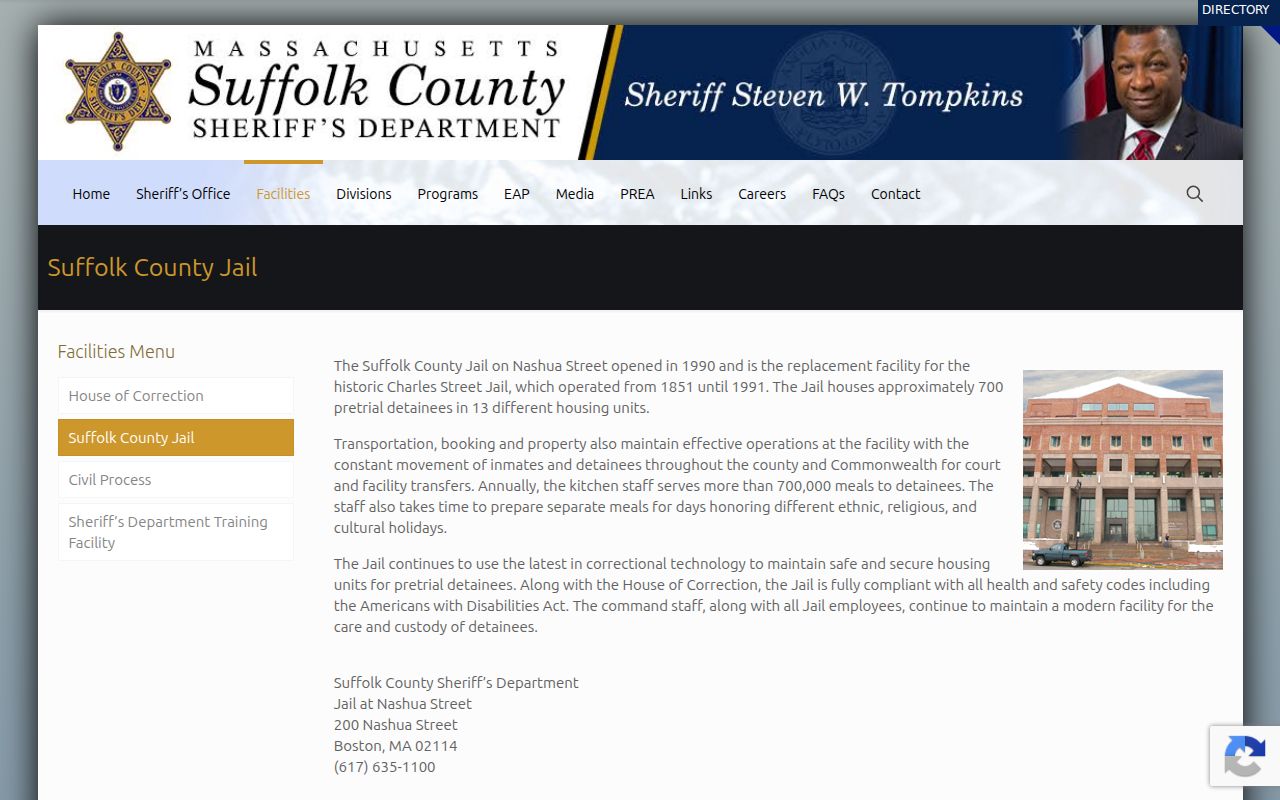
The Suffolk County jail page also flags that no public parking exists, so transit is the better bet. It lists the bail commissioner's after-hours availability as well.
Suffolk County Juvenile Warrant Records
Juvenile matters in Suffolk County move on their own track. Delinquency, harassment, and criminal cases go to a Juvenile Court session, and the records stay confidential in most situations. Two courts split the work. Boston Juvenile Court, at 24 New Chardon Street and (617) 788-8525, covers Brighton, Charlestown, Roxbury, and South Boston. Chelsea Juvenile Court, at 120 Broadway and (617) 660-9226, handles Chelsea, Revere, East Boston, and Winthrop. A blank result in a public portal proves nothing about whether a juvenile warrant exists, so direct any question to the assigned clerk. Details go only to authorized parties. The Boston Juvenile Court page lays out the session's service area and its access limits.
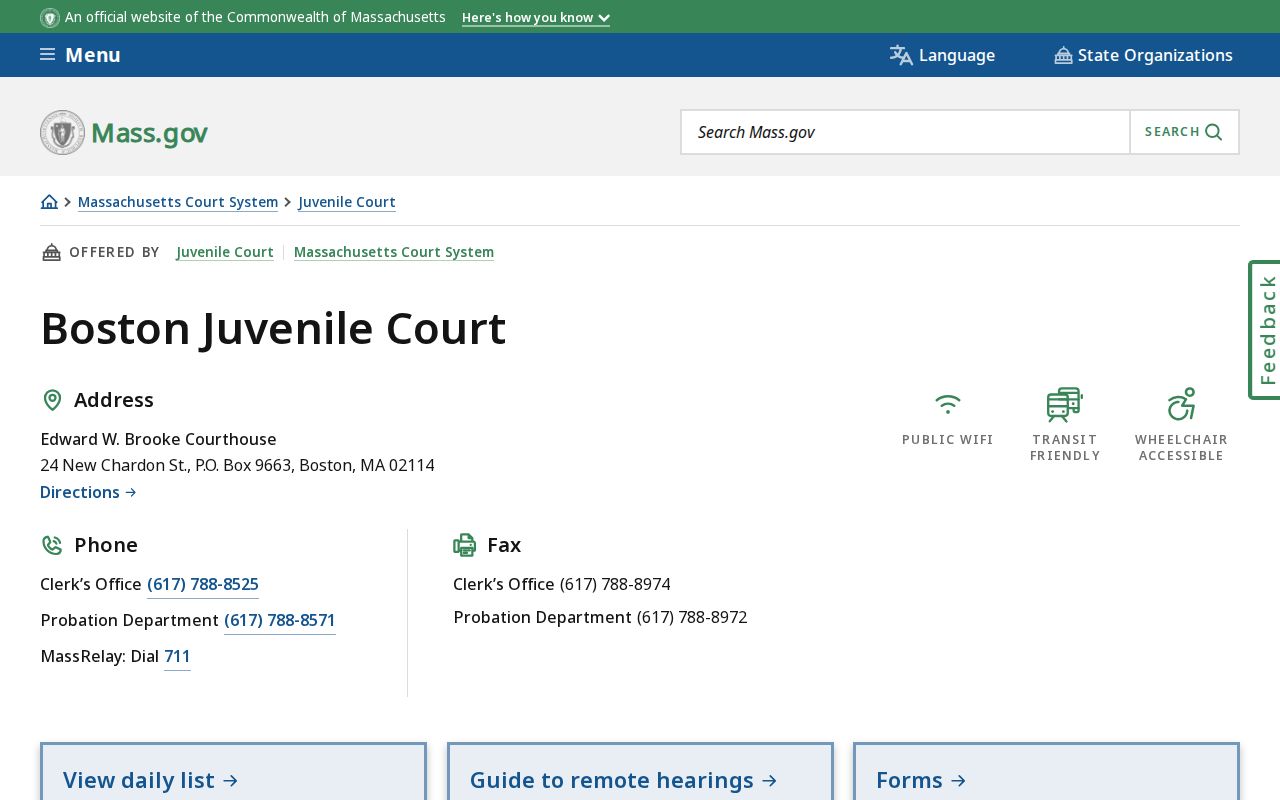
Juvenile files stay confidential, so the assigned clerk is the only reliable source.
Federal Warrants Sit Outside Suffolk County
A federal arrest warrant never runs through Suffolk County's state courts. It belongs to the U.S. District Court for the District of Massachusetts and the U.S. Marshals Service. The Boston division sits at the John Joseph Moakley U.S. Courthouse, 1 Courthouse Way, Suite 2300. Its clerk's office answers at (617) 748-9152, and the public counter is open on weekdays; bring photo identification to get in. For the Marshals, call the district office at (617) 748-2500. The Massachusetts Fugitive Task Force takes tips at (617) 742-5533. Federal dockets live in their own system, which can leave out sealed or unserved warrant material, so a search there is not the whole picture.
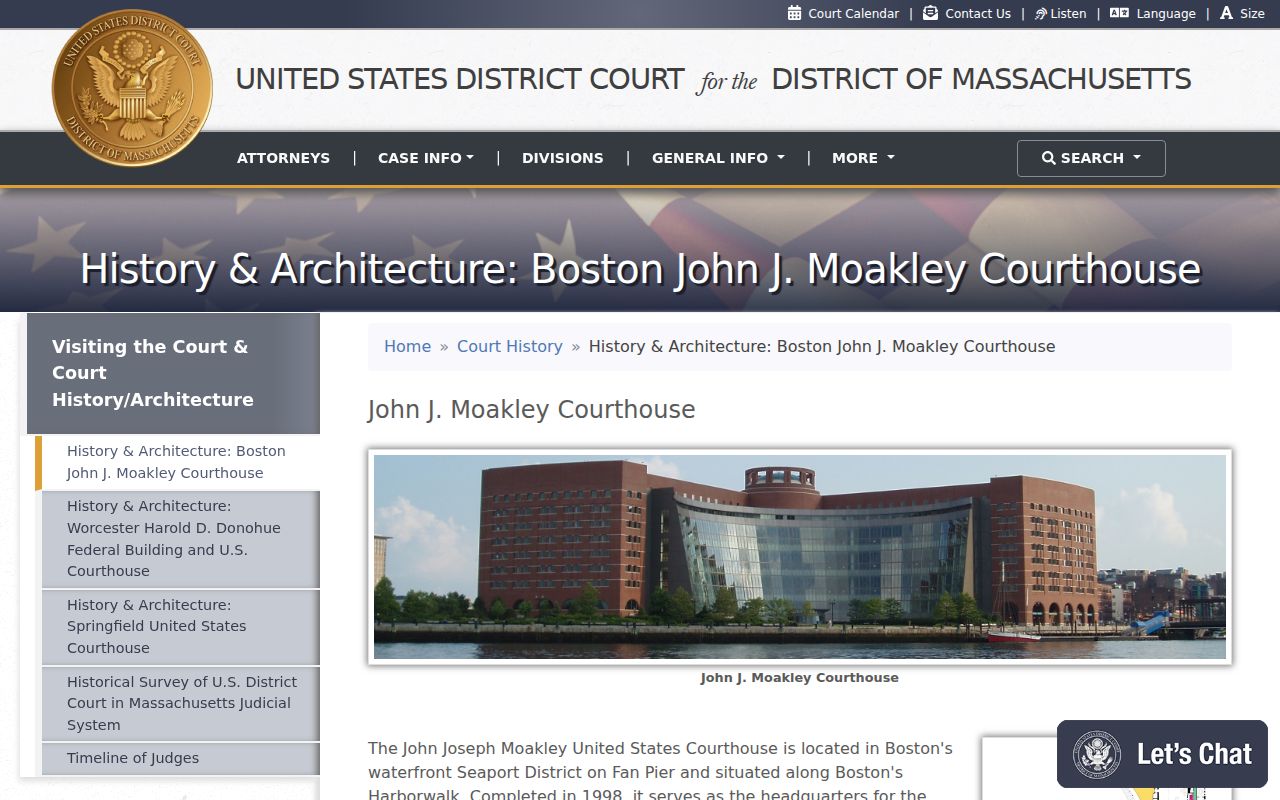
The Moakley courthouse history and access pages describe the building and its public counter. That counter is where a federal case question in Suffolk County starts.