
Suffolk County Traffic Warrants Explained
A traffic warrant lives in a court file, not a driving record. It appears when a citation becomes a case and the driver skips something the court required. Usually that means a hearing or a payment. The court that took the ticket holds the warrant. Massachusetts splits these cases into two tracks. A civil motor vehicle infraction moves under Trial Court Rule VII, which lays out how an unpaid assessment or a missed hearing can pass through contempt process, then a summons, and then an arrest warrant after another failure to appear. A criminal motor vehicle violation moves faster. That track can reach a summons and a warrant in fewer steps. Either way, the issuing court in Suffolk County controls the file, and any Suffolk County warrant check starts there.
Suffolk County Traffic Warrant Paths Compared
The distinction decides which motion to file and what happens if nothing is filed.
| Point | Civil infraction | Criminal violation |
|---|---|---|
| First step | Hearing before a magistrate | Magistrate hearing, then a judge |
| If missed | Possible full ticket payment or a default | A summons to appear before a judge |
| If ignored | Contempt process, then arrest warrant | Arrest warrant and license consequences |
| Fix | Motion to remove the default | Motion based on good cause, filed promptly |
Checking for a Traffic Warrant
The citation number is the fastest tool. The public docket search accepts a ticket or citation mode alongside case numbers, and an exact number beats a name every time. No citation in hand? Use the court and approximate date from any notice or payment receipt. Then call the clerk. Chelsea District Court takes Chelsea and Revere tickets, at (617) 660-9200 or cmchelseadc@jud.state.ma.us. A Boston ticket belongs to the division printed on the citation, and the notice controls if it names another venue. Suffolk County drivers sometimes check the Registry of Motor Vehicles instead. The Registry is not a warrant search, though, and a license status result does not show what a court has done. For a Suffolk County warrant check, the clerk's word is the one that counts.
Suffolk County Traffic Warrants and Good Cause
Good cause can change the outcome of a Suffolk County traffic case. The official traffic hearing page warns that missing a civil hearing without good cause may require paying the full ticket amount to the Registry within 20 days, with substantial fees possible. Anyone with a real explanation should file a motion. Ask the magistrate or judge to remove the default and reschedule the matter. Move quickly. Each week that passes adds administrative consequences, and the court needs the request in writing before it can act.
Inside a Traffic Warrant Record
A Suffolk County traffic docket shows the fields a court keeps for any citation matter. Payment and default entries follow a missed hearing.
| Citation or Case Number | The identifier on the ticket or the court case, for example T24001234. |
|---|---|
| Issuing Court | The BMC division or Chelsea District Court that holds the matter. |
| Charge | The civil infraction or criminal violation as filed. |
| Default Entry | The missed hearing or unpaid assessment, with its date. |
| Amount and Fees | The ticket amount, and any late or release fee the court records. |
| Status | Open, defaulted, warrant issued, or resolved. |
Suffolk County Traffic Warrants After a Miss
A criminal motor vehicle violation carries more risk in Suffolk County. Missing the magistrate hearing can bring a summons to appear before a judge. Ignore that summons and an arrest warrant can follow, along with license consequences. The same official page tells drivers in this position to file a good-cause motion immediately. So contact the issuing court first. Ask whether the case has moved to a judge, whether a warrant is outstanding, and what the motion needs to say. The clerk answers all three.
How to Pay or Lift a Traffic Warrant
Paying a ticket does not lift a warrant. The two are separate steps. The order matters. The Registry's ticket payment page describes a 20-day response window, the possibility of late and release fees, and suspension after continued nonpayment. The Trial Court's electronic payment instructions add a warning that paying a court fee does not remove an outstanding warrant. So call the Suffolk County court first. The practical sequence is a call, a motion or hearing to remove the default, payment of whatever the court orders, and then the administrative release. Ask the clerk what the Registry needs for a Suffolk County release. A court release form or supplemental abstract is often required before a suspension comes off.
Caution: Do not pay a ticket expecting the warrant to disappear. Ask the issuing court how the default will be removed and how the release is documented.
Boston traffic cases follow the same Suffolk County rules. The division printed on the citation decides which counter takes the payment, and the eight-division list is the fastest way to confirm an address before you go.
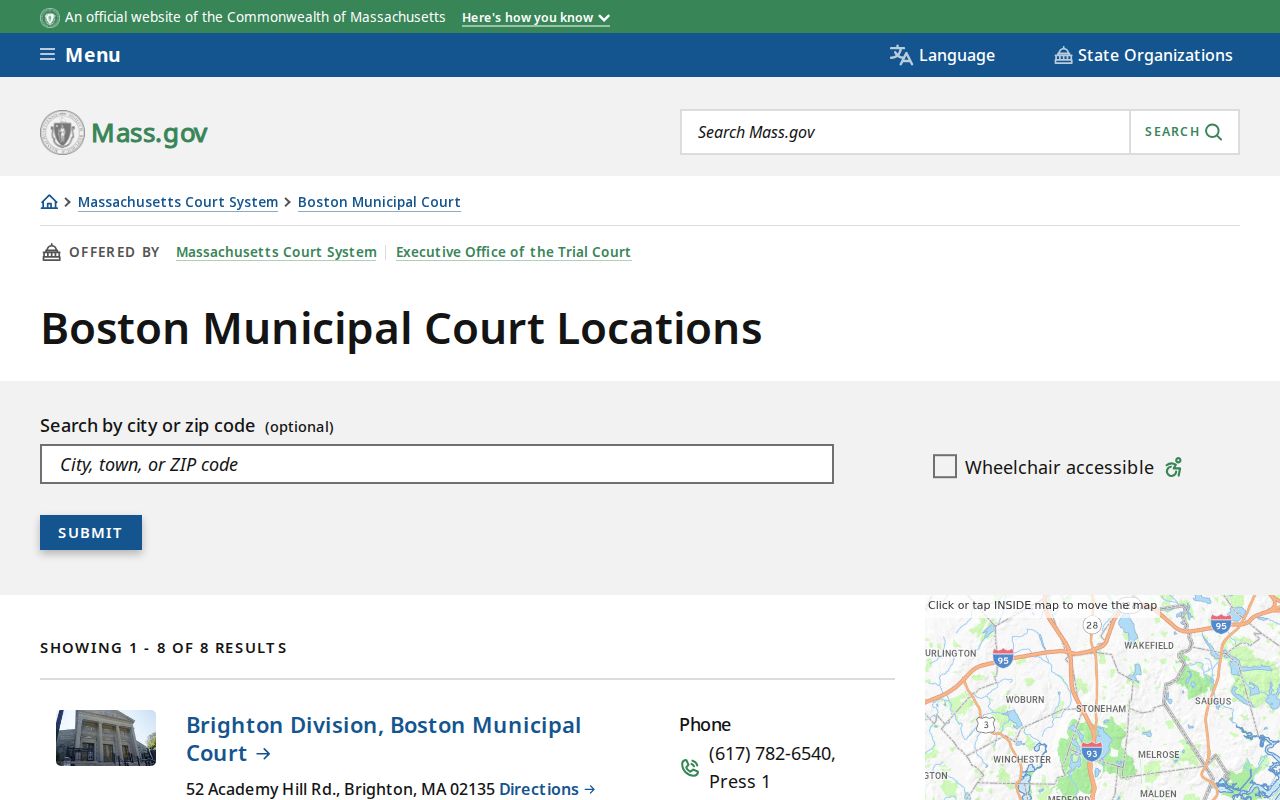
Checking that list first keeps a Suffolk County driver from trekking to the wrong courthouse over a ticket default.
No Suffolk County Traffic Warrant Portal
Suffolk County has no traffic warrant portal or dedicated search form. Enforcement works case by case, and each court keeps its own docket. The public docket search plus the issuing clerk's confirmation is the route that exists. City-level citations work the same way. The municipal warrant page covers how local courts handle their own tickets and ordinance cases.
Traffic Warrants, FTA, and License Holds
A failure to appear creates two problems at once. They get cleaned up in different offices. The court problem is a default or a warrant. The Registry problem is a license or registration hold. Court action comes first. Massachusetts describes a release form and supplemental abstract route for a criminal court failure to appear, so the Registry needs paperwork from the court before it can restore a status. The Registry's suspension guidance covers that step. A docket result alone will not lift a Suffolk County hold.
The Registry Does Not Issue Suffolk Warrants
People see the Registry letter first and assume that is where the trouble began. It is not. The Registry is only reporting a consequence of something the court already did. Whether a default or a warrant actually exists is a question for the clerk who holds the citation file in Suffolk County. That office can also explain what the court will require to fix it. Once the judge acts, the Registry paperwork simply follows from that order.