
Suffolk County Municipal Court Warrants
"Municipal court warrant" is everyday shorthand for a warrant from a lower court that hears local cases. In Suffolk County, that court belongs to the state Trial Court, not to city government. The Boston Municipal Court serves Boston and Winthrop. Chelsea District Court takes Chelsea and Revere adult cases. These dockets generate most Suffolk County warrants: misdemeanors, felonies short of state prison jurisdiction, city ordinances and bylaws, traffic citations, and civil motor vehicle infractions. An ordinance case can end in a warrant just like a criminal charge can. The two land on different dockets under different rules. Know your docket before calling.
Boston Municipal Court Warrant Powers
The naming trips people up. Boston Municipal Court is not a department of Boston city government, and its clerks are not city employees. It is a Trial Court department with eight divisions, serving Boston and Winthrop for criminal, civil, ordinance, and civil motor vehicle matters in Suffolk County. City offices cannot reach into a court file or change a warrant. Remember that before calling city hall for warrant help. A city records request returns agency documents, not court action. Court action stays with the court.
Suffolk County Cities With Municipal Courts
Suffolk County holds four municipalities, and each maps to one lower court. No city or town here runs its own criminal court.
| Municipality | Lower Court | How to Start |
|---|---|---|
| Boston | Boston Municipal Court, eight divisions | Use the division named on the notice |
| Winthrop | Boston Municipal Court, often East Boston | Follow the notice if it names another division |
| Chelsea | Chelsea District Court | Clerk's office at 120 Broadway |
| Revere | Chelsea District Court | Same clerk as Chelsea adult cases |
Suffolk County Municipal Warrant Courts
The two venues work the same way but cover different ground.
| Point | Boston Municipal Court | Chelsea District Court |
|---|---|---|
| Divisions | Eight, each with its own clerk | One courthouse at 120 Broadway |
| Service area | Boston neighborhoods and Winthrop | Chelsea and Revere |
| Clerk contact | Division phone number | (617) 660-9200 |
| Juvenile matters | Boston Juvenile session | Chelsea Juvenile at the same address |
Chelsea District Court also runs adult drug and mental health sessions. Its location page lists clerk, probation, fax, transit, and access details for Suffolk County visitors.
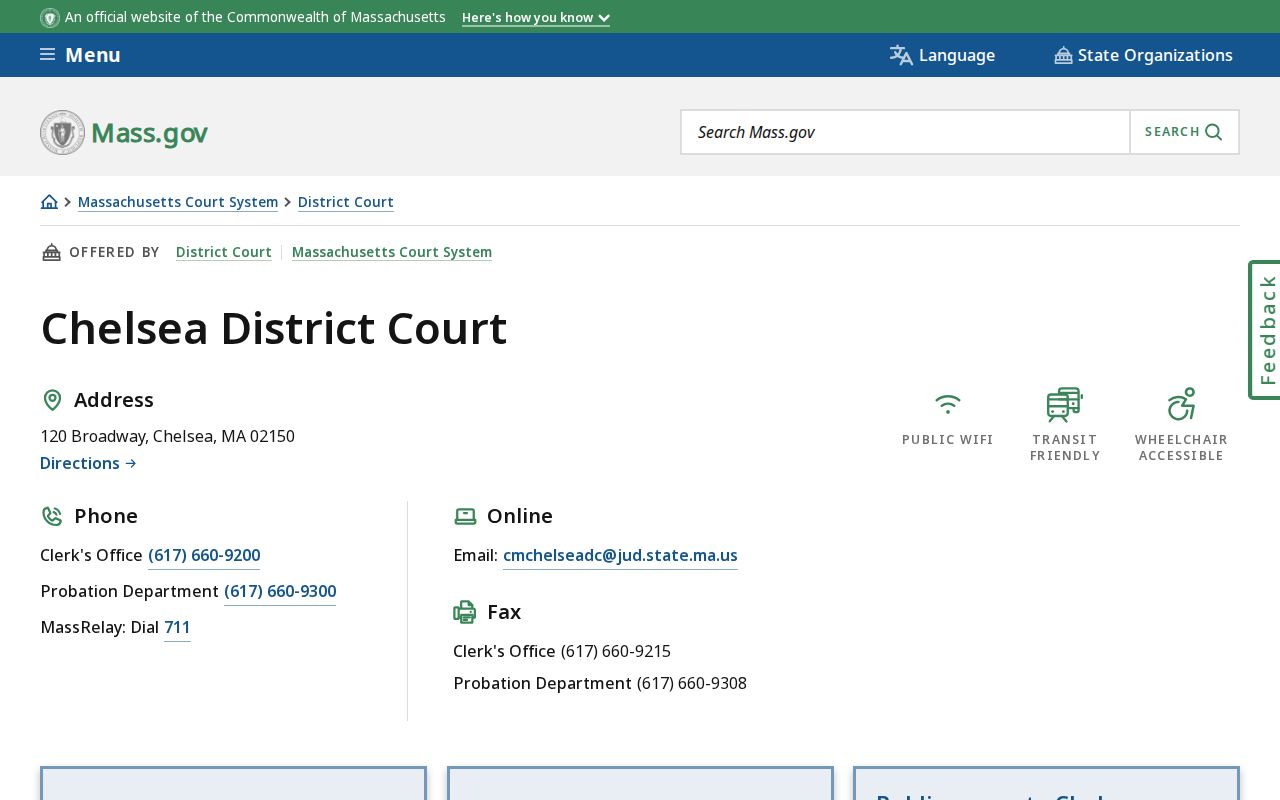
That page settles hours before you travel. The Suffolk County courthouse handles adult and juvenile matters at one address.
Checking a Municipal Court Warrant
A warrant check in Suffolk County follows the same chain as any other case. Start with the public docket search. Enter the department, division, location, and case number. A blank result does not rule out a warrant, and a city cannot confirm a court record, so call the division clerk, or the Chelsea clerk for Chelsea and Revere. Ask plainly whether the file shows an open warrant or a default. Only the clerk can confirm that. The clerk also starts a recall. For current counter details at each venue, the BMC division list and the Chelsea District Court page are the place to look.
City Hall Cannot Recall Suffolk Warrants
Boston's public records office handles city documents, not warrants. A Suffolk County warrant stays with the court that issued it, no matter what the city office digs up. The office sits at 26 Court Street, third floor, and you can reach it at (617) 635-4037 or publicrecords@boston.gov. It runs the city's JustFOIA request system for the records Boston holds. Expect an answer in about 10 business days, and it can stretch that by a 15-day extension if needed. The fee schedule sets paper copies at five cents a page. The first two hours of searching cost you nothing, and after that the rate generally tops out at $25 an hour, with appeals going to the Supervisor of Records. Useful as all that is, none of it reaches a Boston Municipal Court warrant. For that, the court is the office to deal with.
Inside a Municipal Court Warrant
A city court warrant record holds the case-level fields a lower court keeps. Reading them in order keeps two same-name Suffolk County cases straight.
| Case Number | The docket identifier, for example 2401CR001234. |
|---|---|
| Issuing Court | The BMC division or Chelsea District Court location. |
| Charge or Ordinance | The criminal charge, city ordinance, or civil infraction. |
| Default Event | The missed date or unpaid amount that produced the warrant. |
| Status | Open, served, recalled, or resolved on the docket. |
Eight Suffolk County BMC Warrant Divisions
Division choice is the most useful fact in a Boston warrant case. The FY2025 report shows how unevenly the Suffolk County work falls.
Dorchester reported 410 criminal warrants and 888 administrative warrants, more than any division in Suffolk County. Roxbury, West Roxbury, and Central followed. Charlestown and South Boston reported the fewest. Those totals cover one fiscal year and say nothing about a particular warrant.
How to Resolve a Municipal Court Warrant
Suffolk County warrant resolution runs through the division clerk and a judge. Call first, and confirm the counter and its hours. Then appear and ask to clear the warrant or default. The clerk may give you a form, schedule a hearing, or send the matter to a judge. The judge decides whether to recall the warrant, set conditions, or order payment. Fees are set by statute. It costs $50 to recall a default warrant, or one issued solely for failure to pay. $75 applies after an arrest on a bail or probation default, and both are subject to waiver for hardship. A Suffolk County clerk can explain how the recall gets recorded and what proof you receive.
Caution: A city payment portal can collect a fine without touching the warrant, so confirm the court's recall step before you pay anything.
Civil Capias Is Not a Suffolk Warrant
Paperwork marked capias usually points to a civil or family case, not a criminal docket in Suffolk County. Support and contempt matters can produce a civil capias. That kind of order belongs to the court that issued it. The Probate and Family Court handles the case, and the Sheriff's Civil Process Division serves the papers. The Suffolk Probate and Family Court page shows the main courthouse at 24 New Chardon Street plus a Chelsea satellite at 120 Broadway open Tuesday through Thursday. The register answers at (617) 788-8301, and probation at (617) 788-8210. Civil Process sits at 132 Portland Street. Its page explains its service forms and fees, and it takes calls at (617) 704-6999 for Suffolk County parties.
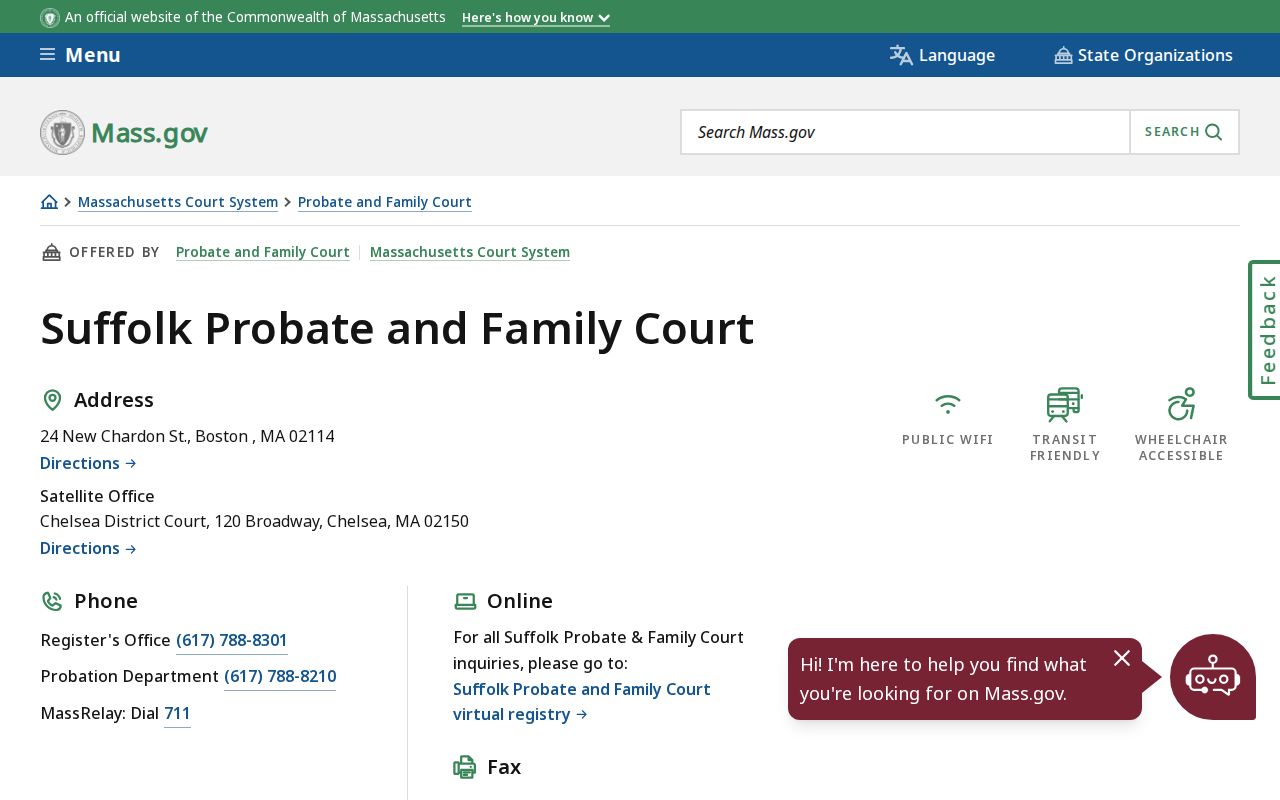
The Probate and Family location page lays out the Chelsea satellite schedule. It also notes that family records in Suffolk County follow separate access rules.