
Suffolk County Active Warrants Explained
In Suffolk County, an active warrant means one thing: the issuing court has not recalled or resolved it in its own records. That is a narrow status. A cached web page proves nothing. A listing from last week proves nothing. Massachusetts stores warrant data in the statewide Warrant Management System, which the public cannot search directly. What the public sees instead are docket events, such as a default, and the clerk decides whether the warrant behind that event still stands.
Is There a Suffolk County Warrant List?
There is no complete public list of Suffolk County warrants, and that is by design rather than oversight. The Sheriff's site publishes custody, facility, civil process, and records contacts. The Trial Court publishes a docket search. The Boston Police Department publishes a curated Most Wanted category, with its own warning about when the information was validated. So the county offers a chain of confirmation instead: docket, then clerk, then written proof. Any site claiming to hold the full county list is selling a product, not showing a court record.
How Suffolk County Tracks Active Warrants
Suffolk County tracks warrants at the case level. When a court enters a default or authorizes an arrest, the entry goes into WMS along with the agency responsible for serving it. The statute that governs warrant data spells out what the system records, who may read it, and the prompt update required when a warrant is recalled. That recall update is what ends active status.
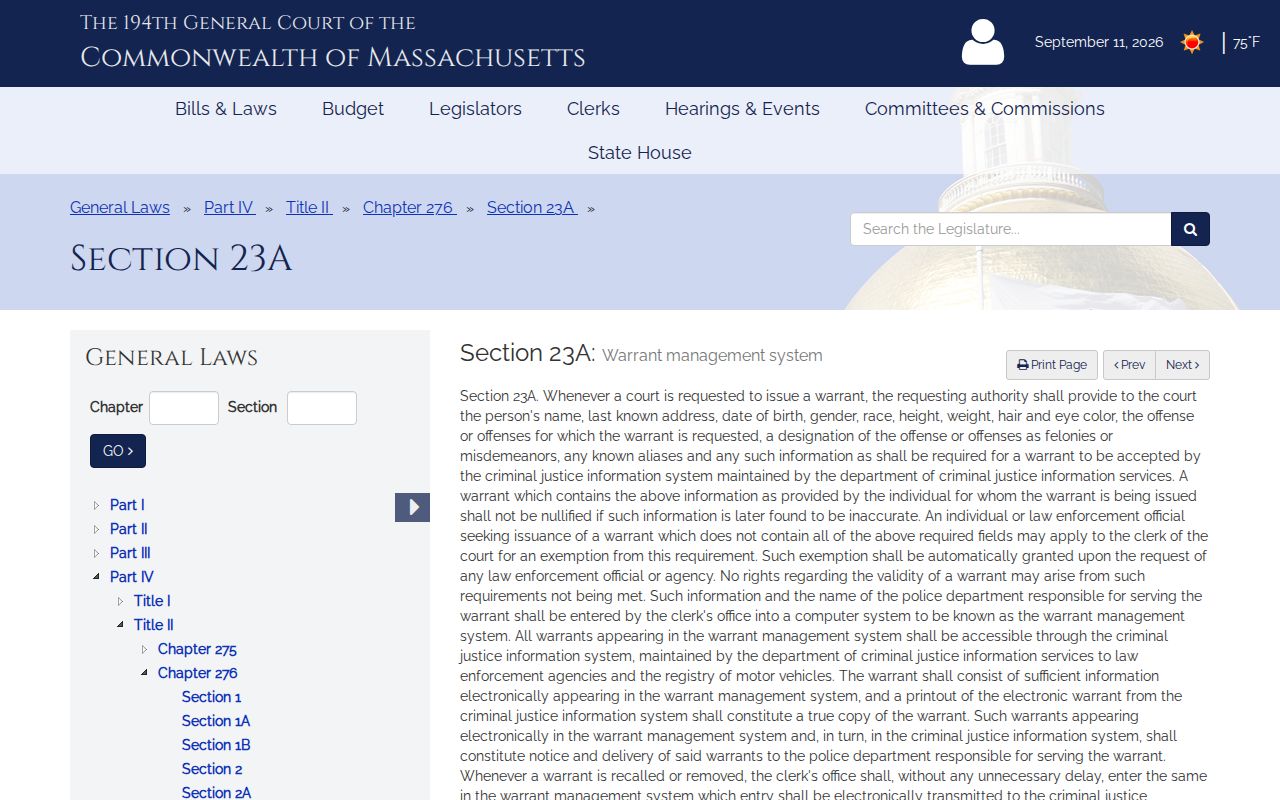
Access belongs to law enforcement and the Registry of Motor Vehicles. That is why Suffolk County has no public name search.
Note: Absence from any public page is not proof that no warrant exists, because restricted records and lagging updates both hide cases.
Suffolk County Warrant Counts by Division
Suffolk County warrant counts appear only as countywide aggregates in the Trial Court's FY2025 caseload report. Those figures describe a fiscal year. They are not a live list.
Administrative warrants outnumbered criminal warrants in that report. So the labels matter. Neither figure names a person or confirms a Suffolk County warrant is open.
Inside an Active Warrant Record
A confirmed Suffolk County warrant entry carries a small set of fields. Read them in order to make sure you have the right case.
| Case Number | The docket identifier, for example 2401CR001234. |
|---|---|
| Charge or Default Basis | The offense, or the missed date or payment that produced the default. |
| Issuing Court | The department and division that controls the case. |
| Serving Agency | The police department or Sheriff unit assigned to execute the warrant. |
| Status | Active, served, recalled, returned, or discharged. |
Suffolk County Jail Records and Warrants
A custody answer and a warrant answer come from different places in Suffolk County, and mixing them up wastes a call. The Sheriff's facility records lines can say whether someone is being held, and they can route bail questions to a bail commissioner. They cannot confirm or clear a court warrant. Chapter 276, section 29 requires a warrant check before release, discharge, or bail, and that requirement exists precisely because custody status and warrant status are separate facts. If a jail call tells you someone is in custody, the warrant question still belongs to the issuing clerk.
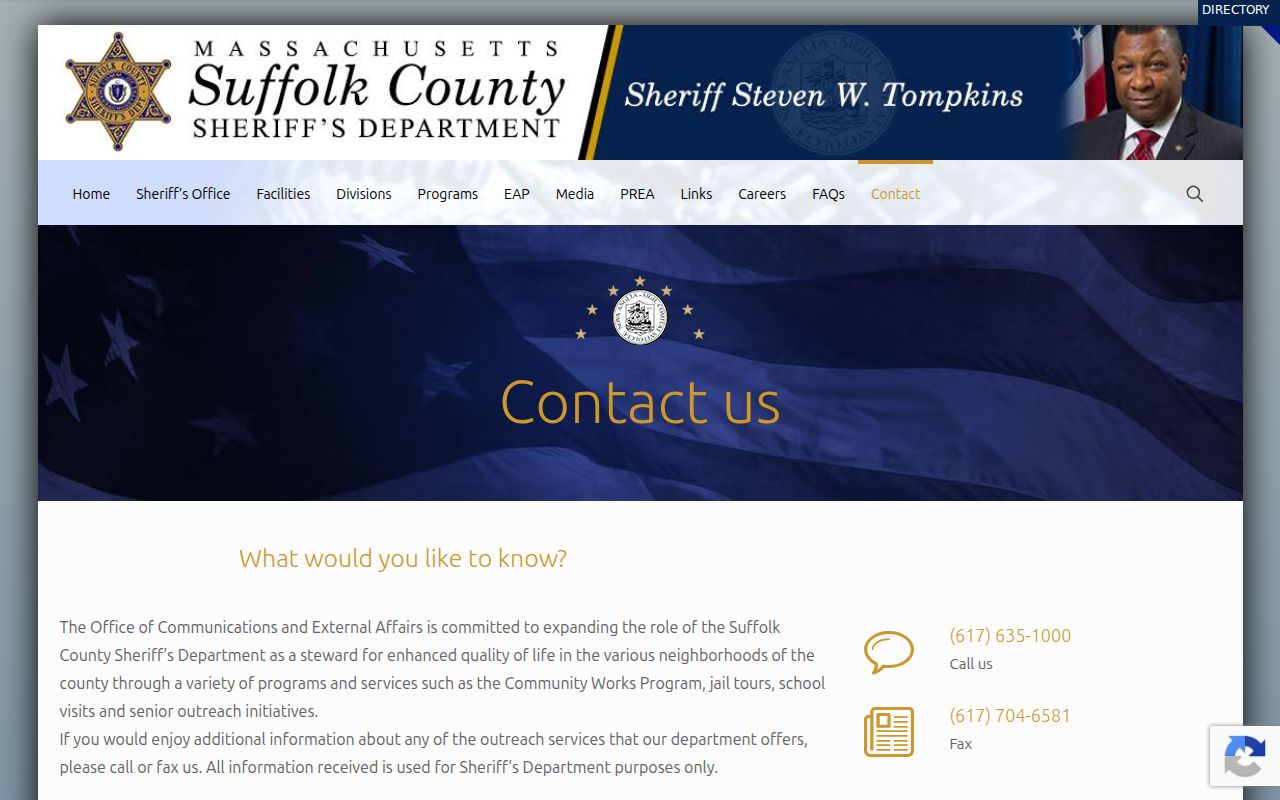
The Sheriff contact page lists the records access officer and each facility line. That is where Suffolk County custody questions start.
Warrant Roundups and Most-Wanted Lists
Suffolk County runs no warrant amnesty or roundup program, so the ordinary path is the issuing court. The county does have one curated public list. Boston Police maintain a Most Wanted category, and each post carries a date plus a warning that the information was validated only when published.
Key Point: The Boston Police Department's Most Wanted category is a dated outreach program, not a complete warrant ledger. The official page is described and linked rather than copied.
Always verify an entry through the issuing court before acting on it, and read more about how that program works on the Suffolk County Most Wanted List page.
Suffolk County CrimeStoppers Is Not a Warrant
CrimeStoppers takes tips, not warrant questions. The Boston program accepts information by phone at 1-800-494-8477, by texting TIP to CRIME (27463), and through a P3 form that allows a photo or video upload. A submission returns a six-digit tip ID and password so the sender can check on it later. Nothing in that workflow looks up a name, a case, or a Suffolk County warrant. A board decides whether a tip earns a reward, and the official material sets no fixed reward cap.
When Your Name Is on the Warrant List
A list entry is a starting point, not a status. Note who published it and when, then find the issuing court from the case information. A Suffolk County warrant may have been recalled since the post went up, and the court's record is the one that matters. The paths to resolve an active warrant are a voluntary appearance, posting bail, and a motion to recall, and all three are best handled with an attorney. The Suffolk County warrant records home page walks through what to bring and who to call.
Important: Contact a lawyer and the issuing court before acting. Do not approach a person named on any public list, and do not treat a dated post as proof of current status.
Suffolk County Warrant Recall Path
A Suffolk County recall clears in three stages, and each stage can trail the last. First the judge or clerk acts on the case and enters the recall. The internal system then updates on its own schedule. The public docket catches up whenever the court's data flows through, which is not always the same day. So a warrant can still read active even after the court has acted. Payment-only defaults run on their own statute. Chapter 276, section 31 spells out the amount owed, the discharge entry, the system update, and the notice that follows. Ask the clerk when the change should appear and what paper proves it.
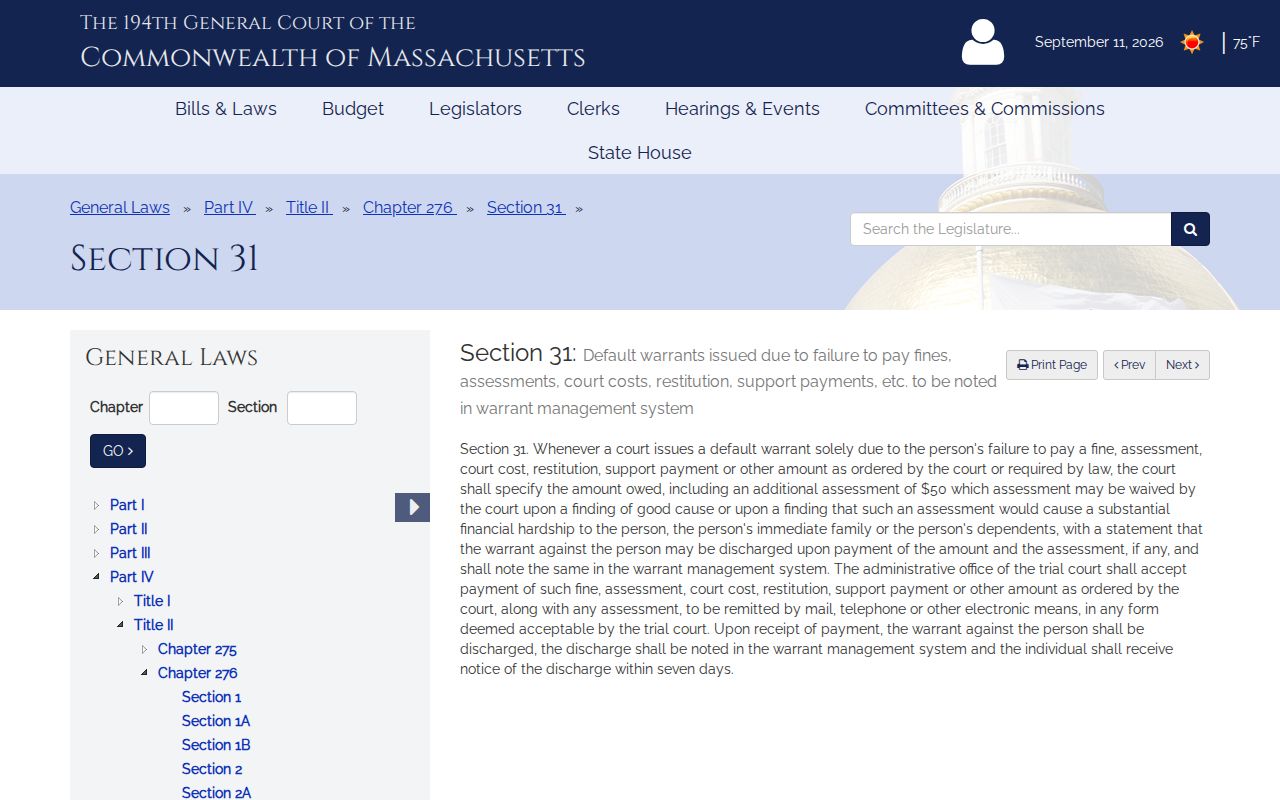
In Suffolk County, that statute governs how a payment-only default gets discharged and then recorded in the warrant system.